
Sany SSR120 Roller Cab Body
The Sany SSR120 Roller Cab Body is the primary exterior shell and structural enclosure that forms the protective cabin for the operator of the Sany SSR120 single-drum vibratory roller. The Sany SSR120 Roller Cab Body serves as the outer skin of the operator compartment, providing protection from the elements, noise attenuation, and impact resistance during daily compaction operations. As a genuine Sany Parts component, the Sany SSR120 Roller Cab Body is manufactured to exact factory specifications for material grade, dimensional accuracy, and surface finish quality.
the Sany SSR120 Roller Cab Body consists of formed steel panels that are welded or fastened to the cab frame structure, creating a rigid enclosure that houses the operator, controls, and interior components. The Sany SSR120 Roller Cab Body exterior surface is treated with a multi-layer corrosion protection system and finished with durable polyurethane paint that withstands prolonged exposure to sunlight, moisture, and job site contaminants. The Sany SSR120 Roller Cab Body panels are designed to be individually replaceable, allowing for targeted repairs of damaged sections.
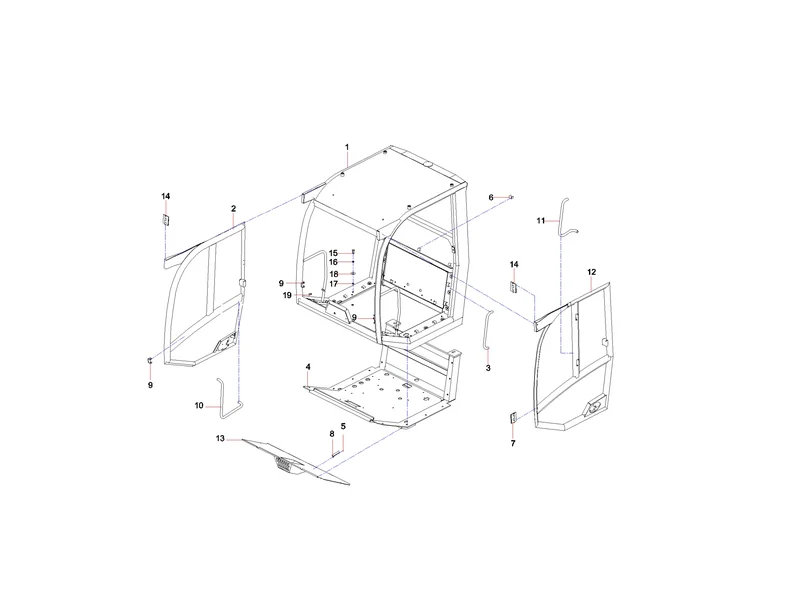
What is the Sany SSR120 Roller Cab Body?
The Sany SSR120 Roller Cab Body is the exterior shell assembly that forms the outer surface of the operator cabin on the SSR120 single-drum vibratory roller. This component includes the roof panel, side panels, rear panel, and associated structural stiffeners that create the weatherproof and protective enclosure for the operator. The Sany SSR120 Roller Cab Body panels are manufactured from cold-rolled steel sheet that is stamped or formed into the required shapes using precision press tools and forming dies.
The Sany SSR120 Roller Cab Body panels are designed with formed-in stiffening ribs and edge flanges that provide rigidity and resistance to oil-canning, vibration, and impact damage from debris. The panel joints are designed to overlap in a way that prevents water intrusion while allowing for thermal expansion and contraction of the steel panels. The Sany SSR120 Roller Cab Body also includes the formed openings for the windshield, side windows, rear window, and door, with precision flanges that provide the mounting surfaces for the glass seals and weatherstripping.
The roof panel of the Sany SSR120 Roller Cab Body is a critical component that provides overhead protection from falling objects, rain, and direct sunlight. The roof panel is formed with a slight crown or curvature that provides structural stiffness and facilitates water drainage, preventing the accumulation of standing water that could lead to corrosion. The panel includes formed-in channels that direct rainwater to the edges of the roof where it can drain away from the door openings and window seals.
The roof panel incorporates reinforced mounting points for the HVAC system, work lights, and rotating beacon that are commonly installed on the cab roof. The interior surface of the roof panel includes attachment provisions for the headliner and sound-dampening insulation materials that reduce interior noise levels and improve the thermal insulation of the cab. The roof panel is designed to be removable for major cab repairs, but it is typically installed as a permanent part of the cab assembly and is not intended for routine removal during normal maintenance operations.
The side and rear panels of the Sany SSR120 Roller Cab Body provide lateral and rear protection while defining the cab’s exterior appearance. The side panels are formed with the necessary contours to accommodate the door opening, window openings, and the interface with the machine frame. The panels include provisions for mounting the exterior mirrors, grab handles for cab access, and any external lighting or signaling devices. The rear panel includes the rear window opening and may include access panels for servicing the HVAC system or electrical components mounted behind the cab.
The panel joints are sealed with a durable automotive-grade seam sealer that prevents water intrusion while remaining flexible enough to accommodate the slight movements that occur between panels during machine operation. The interior surfaces of the panels include attachment points for the interior trim panels, insulation materials, and wiring harness routing clips. The panels are designed to provide adequate clearance for the operator seat in its full range of adjustment positions and for the movement of the steering column and control linkages.
The corrosion protection system applied to the Sany SSR120 Roller Cab Body is a critical factor in the long-term durability of the component. The steel panels undergo a multi-stage cleaning and phosphate pretreatment process that prepares the metal surface for paint adhesion and provides initial corrosion resistance. An epoxy electrocoat primer is then applied to all surfaces, including the interior of enclosed sections, providing a uniform base layer of corrosion protection. The exterior surfaces receive a polyurethane topcoat that is applied in a controlled paint booth environment to ensure consistent color, gloss, and film thickness.
The paint system is designed to resist fading, chalking, and chemical attack from diesel fuel, hydraulic oil, and common construction site chemicals. The interior surfaces of the panels that are not visible after assembly may receive a less cosmetic but equally protective coating. The complete cab body is designed to provide many years of service in outdoor construction environments without significant corrosion deterioration, provided that the paint system is maintained and any damage is repaired promptly.
Product Parameters of Sany SSR120 Roller Cab Body
| Item No. | Part No. | Description |
|---|---|---|
| 1 | SSR120-CB-001 | Cab Roof Panel Assembly |
| 2 | SSR120-CB-002 | Left Side Panel Assembly |
| 3 | SSR120-CB-003 | Right Side Panel Assembly |
| 4 | SSR120-CB-004 | Rear Panel Assembly |
| 5 | SSR120-CB-005 | Windshield Frame Flange |
| 6 | SSR120-CB-006 | Door Opening Frame Assembly |
| 7 | SSR120-CB-007 | Panel Stiffener Rib Set |
| 8 | SSR120-CB-008 | Panel Joint Seam Sealer |
| 9 | SSR120-CB-009 | Roof Drain Channel Assembly |
| 10 | SSR120-CB-010 | Exterior Mirror Mounting Bracket |
| 11 | SSR120-CB-011 | Grab Handle Assembly |
| 12 | SSR120-CB-012 | Cab Body Mounting Hardware Kit |
| 13 | SSR120-CB-013 | Window Seal Retaining Flange Set |
| 14 | SSR120-CB-014 | Interior Trim Mounting Clip Set |
| 15 | SSR120-CB-015 | Cab Body Paint Touch-Up Kit |
Why Choose Our Sany SSR120 Roller Cab Body?
Our Sany SSR120 Roller Cab Body is manufactured to exact OEM specifications, ensuring perfect fit and compatibility with the SSR120 roller’s cab frame structure. Each panel is formed using the same tooling and processes as the original factory components, guaranteeing that the panel contours, mounting hole locations, and interface dimensions match the original design. This precision ensures that replacement panels align correctly with the cab frame, adjacent panels, and the door and window openings.
The correct panel fit is essential for maintaining the weatherproof integrity of the cab, as misaligned panels can create gaps that allow water and dust to enter the operator compartment. The mounting hole patterns are exactly positioned to match the existing holes in the cab frame, eliminating the need for drilling or reaming during installation. The panel edges are formed with the correct flange dimensions and angles to ensure proper overlap and sealing at the panel joints. This exact dimensional compatibility means that replacement panels can be installed quickly and correctly, minimizing the time required for Sany SSR120 Roller Cab Body repairs.
The quality of materials and manufacturing processes used in the Sany SSR120 Roller Cab Body panels provides exceptional durability and appearance. The steel sheet material is sourced from certified mills and undergoes incoming inspection to verify the material grade, thickness, and surface condition. The forming processes are controlled to maintain consistent panel dimensions and surface quality, with regular inspection of the formed panels using check fixtures or coordinate measuring equipment. The paint system is applied in a controlled environment using automated spray equipment that ensures uniform film thickness and consistent color match with the original cab components.
The paint color is formulated to match the Sany factory color specification, ensuring that replacement panels blend seamlessly with the existing cab structure. The corrosion protection system is designed to provide long-term protection against rust and deterioration, even in the harsh environments where vibratory rollers typically operate. The quality of the paint finish is also important for maintaining the professional appearance of the machine, which reflects positively on the equipment owner’s brand image.
We offer comprehensive support and flexible purchasing options that make cab body repairs more manageable. Our inventory includes individual cab body panels as well as complete panel sets, allowing you to purchase only the specific panels that have been damaged rather than a complete cab body assembly. This targeted approach to replacement can significantly reduce the cost of collision repairs compared to replacing the entire cab. Our technical support team can assist with identifying the correct panel part numbers for your specific damage situation and can provide guidance on proper panel removal and installation procedures.
We supply detailed documentation including panel replacement instructions, recommended sealants and adhesives, and torque specifications for panel mounting fasteners. For customers who prefer to have the repairs performed by professionals, we can recommend qualified body shops or service providers in your area who have experience with construction equipment cab repairs. Our commitment to customer satisfaction means that we will work diligently to ensure that ythe Sany SSR120 Roller Cab Body repair project is completed successfully.
Our competitive pricing and warranty coverage provide exceptional value for customers seeking genuine-quality cab body components. By maintaining efficient manufacturing and supply chain operations, we are able to offer cab body panels at prices that are significantly more affordable than traditional dealer channels. We also offer panel sets for common repair scenarios, such as a side panel replacement set that includes the door opening frame and associated sealing components, providing additional value compared to purchasing individual components.
We stand behind every cab body panel we sell with a comprehensive warranty that covers manufacturing defects in materials and workmanship. Each panel is individually inspected before shipment to verify dimensional accuracy, surface finish quality, and the integrity of the paint system. In the rare event that a panel does not meet expectations, our responsive customer service team works quickly to arrange replacement or resolve the issue through other appropriate measures. When you choose the Sany SSR120 Roller Cab Body panels, you receive products that deliver the fit, finish, and durability expected of genuine Sany components.
What are the Routine Maintenance Considerations for the Sany SSR120 Roller Cab Body?
Regular cleaning of the Sany SSR120 Roller Cab Body exterior is essential for maintaining the appearance and preventing corrosion of the painted surfaces. The Sany SSR120 Roller Cab Body should be washed regularly to remove accumulated dirt, mud, and construction debris that can trap moisture against the painted surfaces. The washing process should use a mild automotive detergent and low-pressure water, avoiding high-pressure spray directed at panel joints, window seals, or door seals that could force water past the seals. After washing, the surfaces should be dried with a soft cloth or allowed to air dry to prevent water spotting.
The application of a quality automotive wax or paint sealant to the Sany SSR120 Roller Cab Body surfaces once or twice per year provides an additional layer of protection against UV radiation, acid rain, and environmental contaminants. The wax also makes subsequent cleaning easier by preventing dirt and debris from adhering strongly to the painted surfaces. The Sany SSR120 Roller Cab Body should be inspected during each washing for new paint chips, scratches, or areas of corrosion that may have developed since the previous inspection.
Prompt repair of paint damage is critical for preventing corrosion from initiating and spreading on the Sany SSR120 Roller Cab Body panels. Any paint chips, scratches, or abrasions that expose the bare metal should be repaired as soon as possible, ideally within a few days of the damage occurring. The repair process involves cleaning the damaged area to remove any loose paint, dirt, or corrosion products, applying a corrosion-inhibiting primer to the exposed metal, and then applying a color-matched topcoat to restore the appearance and protection.
For small chips and scratches, touch-up paint in the correct color can be applied using a fine brush or paint pen. For larger damaged areas, professional refinishing may be required to achieve a satisfactory appearance and adequate corrosion protection. The panel seams and joints should be inspected periodically for cracking or separation of the seam sealer, which can allow water to enter the joint and initiate corrosion between the panels. Any damaged seam sealer should be removed and replaced with a compatible automotive-grade seam sealer to restore the weatherproof seal.
the Sany SSR120 Roller Cab Body panel fasteners and mounting hardware should be inspected periodically to ensure that all panels remain securely attached. The vibration and shock loads experienced during roller operation can cause panel fasteners to loosen over time, which can lead to panel movement, noise, and accelerated wear at the mounting points. The accessible fasteners should be checked for proper tightness during scheduled maintenance intervals, and any loose fasteners should be tightened to the specified torque.
The panel mounting points should be inspected for elongation of the mounting holes or cracking around the fastener locations, which can indicate that the panel has been subjected to excessive loads or vibration. The rubber isolation grommets or bushings at the panel mounting points should be inspected for deterioration, and replaced if they show signs of cracking, hardening, or compression set. The panel alignment should be checked by verifying that the gaps between adjacent panels are consistent and within the specified tolerance range. Misaligned panels can indicate loose or damaged mounting hardware, deformation of the panel, or damage to the cab frame structure.
The window and door seal interfaces with the Sany SSR120 Roller Cab Body should be maintained to ensure weatherproof integrity and prevent water and dust intrusion. The seal retaining flanges around the window openings should be inspected for corrosion, deformation, or damage that could compromise the seal’s ability to prevent water intrusion.
Any corrosion on the flange surfaces should be cleaned and treated, and the painted surface should be restored to provide a smooth surface for the seal to contact. The drain holes in the bottom of the door openings and window frames should be kept clear of debris to allow any water that enters the seal area to drain away rather than accumulating and causing corrosion.
The door striker pin and latch mechanism mounting points on the Sany SSR120 Roller Cab Body should be inspected for secure attachment and proper alignment. The door seal contact surface on the Sany SSR120 Roller Cab Body should be kept clean and free of debris that could prevent the seal from making full contact. The application of a silicone-based rubber protectant to the door and window seals once or twice per year helps maintain the flexibility and sealing performance of the rubber components, extending their service life and preventing the hardening and cracking that can lead to seal failure.
Online Catalog of SANY Parts
Learn MoreIf you have any questions about our products, services, or anything related to what we offer, please don’t hesitate to leave us a message—our dedicated team is always ready to provide prompt and helpful responses to address your concerns. What’s more, when you become our valued customer, we’re delighted to offer you complimentary catalog services, giving you access to detailed, up-to-date information on our full range of products, specifications, and offerings to help you make informed decisions.
[custom_blog category=”catalog” style=”grid” columns=”3″ count=”6″ title=”yes” content=”excerpt” pagination=”0″]
Latest SANY Industry News
View All News[custom_blog category=”news” style=”grid” columns=”1″ count=”4″ title=”yes” content=”excerpt” pagination=”0″]