Sany SSR120 Roller Connecting Rod Mechanism
The Sany SSR120 Roller Connecting Rod Mechanism is a precision-engineered linkage assembly that transmits reciprocating motion and mechanical force between the vibratory drum’s eccentric weight system and the drive components of the Sany SSR120 single-drum vibratory roller. This connecting rod mechanism converts the rotational motion of the hydraulic vibratory motor into the linear oscillating force that drives the eccentric weights, generating the compaction energy required for effective soil and asphalt densification.
As a trusted supplier of Sany Parts, we provide genuine OEM connecting rod mechanisms manufactured to the exact engineering specifications of the original equipment. The connecting rod mechanism features a forged steel connecting rod, precision-ground bearing journals, high-capacity spherical plain bearings, and a balanced counterweight assembly that ensures smooth, vibration-free operation at high rotational speeds, making it an indispensable component for achieving optimal compaction performance.
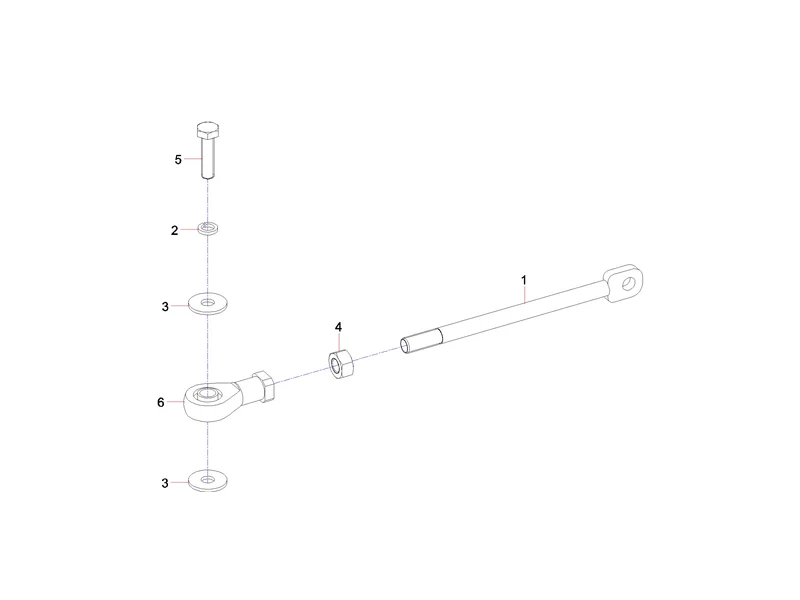
What is the Sany SSR120 Roller Connecting Rod Mechanism?
The Sany SSR120 Roller Connecting Rod Mechanism is a critical drivetrain component located within the vibratory drum assembly of the SSR120 single-drum roller. Its primary function is to transfer the rotational power from the hydraulic vibratory motor to the eccentric weight shaft, converting the smooth rotary motion of the motor into the high-frequency oscillatory force that generates the compaction energy.
The connecting rod mechanism consists of a forged steel connecting rod with a large-end bearing that attaches to the crankshaft of the vibratory motor and a small-end bearing that connects to the eccentric weight shaft. The large-end bearing the Sany SSR120 Roller Connecting Rod Mechanism is a split-shell hydrodynamic bearing that operates on a film of pressurized oil, while the small-end bearing is a spherical plain bearing that accommodates the angular misalignment inherent in the reciprocating motion. The connecting rod is manufactured from micro-alloyed forging steel and is shot-peened on all surfaces to introduce compressive residual stresses that enhance fatigue resistance.
The Sany SSR120 Roller Connecting Rod Mechanism is designed to operate at rotational speeds of up to 2500 RPM, generating centrifugal forces that produce the vibratory amplitude required for effective compaction. The connecting rod the Sany SSR120 Roller Connecting Rod Mechanism is dynamically balanced as part of a matched assembly that includes the eccentric weights and counterbalance masses. This balancing process involves measuring the rotating assembly on a dynamic balancing machine and adding or removing material from designated balance pads to achieve a balance grade of G6.3 or better, as specified by ISO 1940.
The balanced assembly ensures that the vibratory forces are directed primarily in the vertical plane, maximizing compaction effectiveness while minimizing undesirable horizontal vibrations that could cause operator discomfort and accelerated machine wear. The connecting rod mechanism the Sany SSR120 Roller Connecting Rod Mechanism is also equipped with an oil slinger ring that distributes lubricant to the large-end bearing, ensuring consistent oil supply even during high-speed operation.
The Sany SSR120 Roller Connecting Rod Mechanism incorporates several advanced design features that enhance its durability and performance. The connecting rod is forged with an I-beam cross-section that provides maximum stiffness and strength with minimum weight, reducing the reciprocating mass and the resulting inertial forces. The large-end bearing cap the Sany SSR120 Roller Connecting Rod Mechanism is secured with four high-tensile bolts that are torqued using the angle-controlled tightening method to achieve precise clamping force.
The bolts are manufactured from chromium-molybdenum alloy steel and are designed to be tightened to the yield point, providing maximum joint integrity. The small-end bearing the Sany SSR120 Roller Connecting Rod Mechanism is a maintenance-free spherical plain bearing with a PTFE-lined inner surface that provides self-lubricating properties and eliminates the need for periodic greasing. The bearing is retained in the connecting rod eye by a circlip and is designed to accommodate angular misalignment of up to 7 degrees, ensuring reliable operation even under the dynamic loading conditions encountered during compaction.
The Sany SSR120 Roller Connecting Rod Mechanism is manufactured to the highest quality standards, with each component undergoing rigorous inspection and testing. The connecting rod forgings are subjected to magnetic particle inspection to detect any surface defects, and the finished rods are measured for dimensional accuracy using coordinate measuring machines. The large-end bearing shells are manufactured from tri-metal bearing material consisting of a steel backing, a copper-lead intermediate layer, and a lead-tin-copper overlay that provides excellent conformability and embeddability.
The bearing shells are inspected for wall thickness uniformity using ultrasonic measurement, and the bearing clearance the Sany SSR120 Roller Connecting Rod Mechanism is verified by assembling the connecting rod on a test journal and measuring the oil clearance with a dial bore gauge. Sany SSR120 Roller Connecting Rod Mechanism connecting rod assembly is weight-matched to within 2 grams of the specified target weight to ensure dynamic balance. Only connecting rod mechanisms that pass all quality control checks are released for distribution and installation in SSR120 rollers.
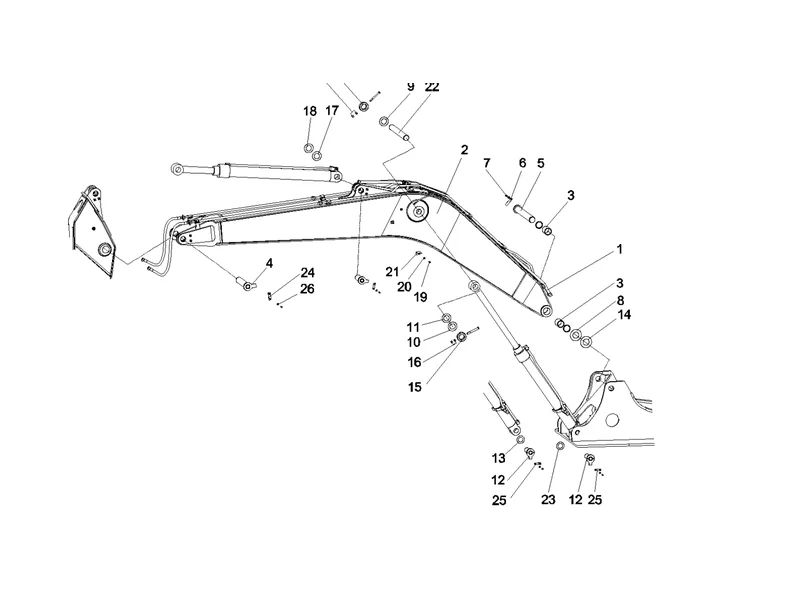
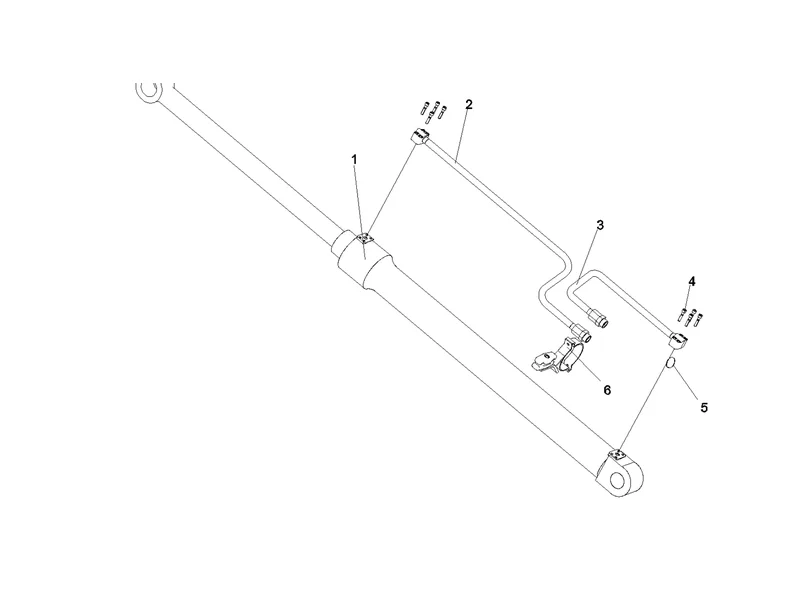
Product Parameters of Sany SSR120 Roller Connecting Rod Mechanism
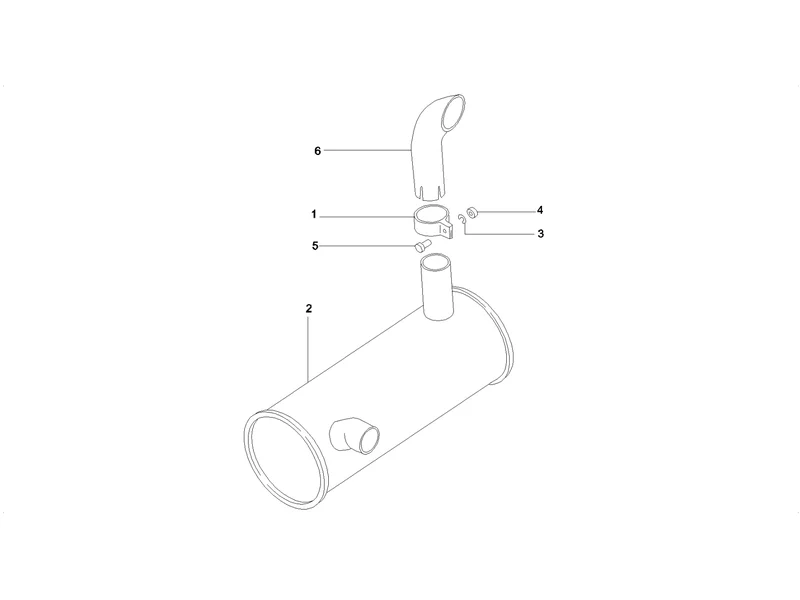
| Item No. | Part No. | Description |
|---|---|---|
| 1 | SSR120-CR-001 | Forged Steel Connecting Rod – I-Beam Profile |
| 2 | SSR120-CR-002 | Large-End Split-Shell Bearing Set |
| 3 | SSR120-CR-003 | Small-End Spherical Plain Bearing |
| 4 | SSR120-CR-004 | Large-End Bearing Cap with Bolt Holes |
| 5 | SSR120-CR-005 | High-Tensile Connecting Rod Bolt Set |
| 6 | SSR120-CR-006 | Oil Slinger Ring Assembly |
| 7 | SSR120-CR-007 | Small-End Bearing Retaining Circlip |
| 8 | SSR120-CR-008 | Eccentric Weight Assembly – Matched Set |
| 9 | SSR120-CR-009 | Counterbalance Weight Assembly |
| 10 | SSR120-CR-010 | Balance Pad Weight Adjustment Kit |
| 11 | SSR120-CR-011 | Crankshaft Journal Sleeve |
| 12 | SSR120-CR-012 | Eccentric Shaft Coupling Adapter |
| 13 | SSR120-CR-013 | Lubrication Oil Gallery Tube |
| 14 | SSR120-CR-014 | Dynamic Balance Shim Set |
| 15 | SSR120-CR-015 | Connecting Rod Alignment Tool |
Why Choose Our Sany SSR120 Roller Connecting Rod Mechanism?
Our Sany SSR120 Roller Connecting Rod Mechanism is manufactured to the highest standards of precision and durability, ensuring optimal compaction performance and extended service life. The connecting rod is forged from vacuum-degassed micro-alloyed steel and the Sany SSR120 Roller Connecting Rod Mechanism is subjected to controlled cooling after forging to achieve a uniform fine-grain microstructure that provides excellent fatigue strength. The rod is then shot-peened on all surfaces using steel shot to induce compressive residual stresses that inhibit crack initiation and propagation.
The large-end bearing bore the Sany SSR120 Roller Connecting Rod Mechanism is honed to a surface finish of Ra 0.2 microns and is held to a diameter tolerance of plus 0.000 minus 0.015mm, ensuring precise bearing crush and optimal oil clearance. The small-end bearing housing is machined to a tolerance that provides the correct interference fit for the spherical plain bearing, preventing bearing rotation within the housing while accommodating thermal expansion. This meticulous attention to manufacturing detail ensures that every connecting rod mechanism we supply delivers the performance and reliability of the original factory component.
We use only premium materials and components in our Sany SSR120 Roller Connecting Rod Mechanism. The large-end bearing shells are sourced from a leading bearing manufacturer and feature a tri-metal construction with a steel backing for strength, a copper-lead intermediate layer for fatigue resistance, and a lead-tin-copper overlay for conformability and corrosion resistance. The small-end spherical plain bearing the Sany SSR120 Roller Connecting Rod Mechanism is manufactured with a hardened steel outer ring and a PTFE-lined inner ring that provides self-lubricating operation and eliminates the need for periodic greasing.
The connecting rod bolts are produced from premium chromium-molybdenum alloy steel and are heat-treated to achieve a tensile strength of 1200 MPa minimum. Each bolt is subjected to magnetic particle inspection to detect surface defects and is individually identified with a lot number for traceability. The balance weights are cast from high-density ductile iron and are machined to precise dimensions to ensure accurate dynamic balance of the rotating assembly.
We offer competitive pricing on the Sany SSR120 Roller Connecting Rod Mechanism while maintaining the precision and quality standards that are essential for this critical vibrating assembly component. Our efficient manufacturing operations and direct relationships with material suppliers allow us to deliver genuine OEM-quality connecting rod mechanisms at prices that are significantly lower than those charged by equipment dealerships. We maintain inventory of complete connecting rod mechanism kits as well as individual replacement components, so you can order a full assembly for a major overhaul or individual parts to address specific wear issues.
For customers with multiple SSR120 rollers in their fleet, we provide volume pricing and can establish a scheduled delivery program that aligns with your preventive maintenance calendar. Our technical support team is available to provide guidance on connecting rod installation, bearing clearance measurement, and bolt torque procedures to ensure that Sany SSR120 Roller Connecting Rod Mechanism is installed correctly and performs as intended.
We stand behind the quality of our Sany SSR120 Roller Connecting Rod Mechanism with comprehensive warranty protection and responsive after-sales support. Our warranty covers manufacturing defects in materials and workmanship, giving you confidence that your investment is protected. We provide detailed technical documentation, including assembly drawings, torque specifications, and bearing clearance data, to assist your maintenance technicians in performing accurate installations and inspections.
Our quality control records include dimensional inspection reports, material certifications, and dynamic balance test results for each connecting rod assembly, providing full traceability from raw material to finished product. In the event that a connecting rod component does not meet your expectations, our customer service team is ready to resolve the issue promptly. With our global shipping capability, we can deliver connecting rod mechanisms to your location quickly, minimizing equipment downtime. Choose our connecting rod mechanism and experience the performance and reliability that genuine Sany quality delivers.
What are the Routine Maintenance Considerations for the Sany SSR120 Roller Connecting Rod Mechanism?
Regular oil analysis is one of the most effective maintenance practices for monitoring the condition of the Sany SSR120 Roller Connecting Rod Mechanism. The vibratory drum oil should be sampled every 250 operating hours and sent to a qualified laboratory for analysis. The laboratory report will provide information on oil viscosity, contamination levels, and the concentration of wear metals such as iron, copper, lead, and aluminum. An increasing trend in wear metal concentration can indicate abnormal bearing wear, allowing you to schedule a repair before a catastrophic failure occurs.
The oil should be changed according to the intervals specified in the SSR120 maintenance schedule, typically every 1000 operating hours or annually. Use only the oil grade and viscosity recommended by Sany for the vibratory drum system, as using an incorrect oil can compromise the hydrodynamic lubrication of the large-end bearing and lead to premature failure. Always replace the oil filter when changing the oil to remove accumulated contaminants.
Monitor the vibration characteristics of the Sany SSR120 Roller Connecting Rod Mechanism during operation as an indicator of Sany SSR120 Roller Connecting Rod Mechanism’s condition. Unusual vibrations, knocking sounds, or changes in the compaction performance can signal problems with the connecting rod mechanism. Pay attention to any metallic knocking noise that occurs at the vibratory frequency, as this can indicate excessive bearing clearance or a loose connecting rod bolt. If unusual vibrations are detected, stop Sany SSR120 Roller Connecting Rod Mechanism immediately and investigate the cause before resuming operation.
Use a vibration analyzer to measure the vibration spectrum at the drum bearing housings, comparing the readings to baseline measurements taken when Sany SSR120 Roller Connecting Rod Mechanism was new or recently overhauled. An increase in vibration amplitude at the vibratory frequency or the appearance of harmonics can indicate imbalance in the rotating assembly or bearing deterioration. Prompt investigation of vibration anomalies can prevent minor problems from escalating into major repairs.
When the Sany SSR120 Roller Connecting Rod Mechanism requires disassembly for inspection or bearing replacement, follow the procedures outlined in the official Sany service manual. Before beginning disassembly, drain the vibratory drum oil and remove the drum end covers to access the connecting rod mechanism. Mark the orientation of the connecting rod and bearing cap to ensure correct reassembly. When removing the connecting rod bolts, note that they are designed for one-time use and must be replaced with new bolts whenever the connecting rod is disassembled.
Measure the large-end bearing clearance using Plastigauge or a dial bore gauge, comparing the measurement to the specified clearance range. If the clearance exceeds the maximum allowable limit, the bearing shells must be replaced. Inspect the connecting rod for any signs of cracking, bending, or discoloration from overheating. Check the small-end bearing for excessive radial play or roughness when rotated, and replace it if any degradation is detected. After reassembly, refill the drum with the specified oil and verify that the vibration system operates smoothly before returning Sany SSR120 Roller Connecting Rod Mechanism to service.
The connecting rod bolts of the Sany SSR120 Roller Connecting Rod Mechanism are critical fasteners that must be tightened with extreme precision. Always use new bolts when reassembling the connecting rod, as the bolts are designed to be tightened to their yield point and cannot be reused. Lubricate the bolt threads and the underside of the bolt heads with the specified assembly lubricant before installation. Tighten the bolts in three stages using the angle-controlled method: first, tighten to the recommended pre-torque value; second, tighten to the specified angle using an angle gauge; and third, verify that the final torque reading falls within the acceptable range.
Do not use a standard torque wrench alone, as the friction variation in the threads can result in inconsistent clamping force. After the bolts are tightened, verify the bearing clearance and check that the crankshaft rotates freely without binding. Record the bolt torque values and the bearing clearance measurements in the maintenance log for future reference. Proper bolt tightening is essential for the reliability of the connecting rod mechanism and the safety of the operator.
Online Catalog of SANY Parts
Learn MoreIf you have any questions about our products, services, or anything related to what we offer, please don’t hesitate to leave us a message—our dedicated team is always ready to provide prompt and helpful responses to address your concerns. What’s more, when you become our valued customer, we’re delighted to offer you complimentary catalog services, giving you access to detailed, up-to-date information on our full range of products, specifications, and offerings to help you make informed decisions.