
Sany SSR120 Roller Pump Connection
The Sany SSR120 Roller Pump Connection is a specialized hydraulic interface assembly that links Sany SSR120 Roller Pump Connection-driven hydraulic pump to the roller’s main hydraulic system, enabling the transfer of pressurized fluid that powers steering, vibration, and propulsion functions. Sany SSR120 Roller Pump Connection assembly includes precision-machined couplings, high-pressure hoses, mounting flanges, and sealing elements designed to withstand the extreme pressures and pulsations generated during vibratory compaction operations.
As a trusted supplier of genuine Sany Parts, we provide pump connection assemblies that meet OEM specifications for fit, pressure rating, and durability. A properly installed and maintained pump connection is essential for preventing hydraulic fluid leaks, maintaining system efficiency, and avoiding the catastrophic failures that can result from coupling separation under load.
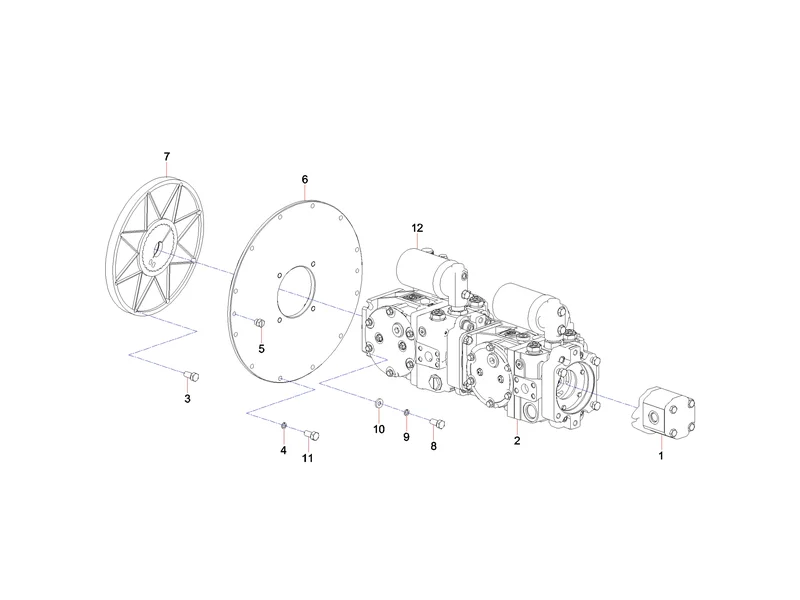
What is the Sany SSR120 Roller Pump Connection?
The Sany SSR120 Roller Pump Connection is an engineered assembly that provides the mechanical and hydraulic interface between Sany SSR120 Roller Pump Connection’s power take-off and the main hydraulic pump. Sany SSR120 Roller Pump Connection typically includes a splined coupling or flexible coupling element that transmits rotational torque from Sany SSR120 Roller Pump Connection flywheel or accessory drive to the pump input shaft while accommodating minor misalignments between the two rotating components.
ts between the two rotating components.
The coupling is housed within a machined adapter plate that bolts to both Sany SSR120 Roller Pump Connection bell housing and the pump mounting flange, ensuring precise alignment within specified tolerances. High-pressure hydraulic hoses or rigid steel tubes connect the pump outlet ports to the main hydraulic system manifold, with O-ring face seal fittings or 24-degree cone fittings that provide leak-free connections at system pressures reaching 350 bar or higher.
The pump connection assembly must withstand the unique operating conditions of a vibratory roller, which include continuous high-frequency vibration, shock loads from drum impacts, wide ambient temperature variations, and exposure to dust, moisture, and construction debris. The coupling element is designed with torsional damping characteristics that absorb driveline vibrations and protect both the pump and engine from damaging torque spikes.
The adapter plate is machined from high-strength steel or ductile iron with precise dowel pin locations that guarantee repeatable pump alignment during installation. Sealing elements are selected from fluoroelastomer or hydrogenated nitrile materials that resist degradation from hot hydraulic oil and maintain elasticity across the full operating temperature range. Each connection point incorporates redundant sealing features where practical to provide enhanced leak protection.
The hydraulic hoses within the pump connection assembly are critical components that must be correctly specified for the application. They are typically constructed with multiple spiral-wire reinforcement layers that provide the burst strength required for high-pressure hydraulic circuits while maintaining sufficient flexibility for routing around engine compartment obstacles. The inner tube is made from oil-resistant synthetic rubber that does not degrade or shed particles that could contaminate the hydraulic system.
Hose ends are crimped with precision dies that achieve the manufacturer-specified compression ratio for the fitting and hose combination. Each hose assembly is proof-tested to twice the rated working pressure before shipment. The hose routing is designed to avoid sharp bends, contact with hot surfaces, and chafing against adj The Sany SSR120 Roller Pump Connection is engineered for straightforward installation and removal during pump replacement or engine service procedures. The adapter plate incorporates threaded holes for jacking screws that facilitate controlled separation of the pump from Sany SSR120 Roller Pump Connection without damaging mating surfaces.
l loads that cause premature coupling wear, bearing failure, and shaft seal leakage.Alignment dowels ensure that the pump is correctly positioned relative to Sany SSR120 Roller Pump Connection crankshaft centerline, preventing the radial loads that cause premature coupling wear, bearing failure, and shaft seal leakage.
Product Parameters of Sany SSR120 Roller Pump Connection
| Item No. | Part No. | Description |
|---|---|---|
| 1 | SSR120-PC-001 | Pump Adapter Plate Assembly |
| 2 | SSR120-PC-002 | Flexible Coupling Element |
| 3 | SSR120-PC-003 | Splined Drive Hub |
| 4 | SSR120-PC-004 | High-Pressure Suction Hose |
| 5 | SSR120-PC-005 | High-Pressure Delivery Hose |
| 6 | SSR120-PC-006 | O-Ring Face Seal Fitting |
| 7 | SSR120-PC-007 | Pump Mounting Bolt Set |
| 8 | SSR120-PC-008 | Coupling Alignment Dowel |
| 9 | SSR120-PC-009 | Hose Protective Sleeve |
| 10 | SSR120-PC-010 | Pump Inlet Strainer |
| 11 | SSR120-PC-011 | Adapter Plate Gasket |
| 12 | SSR120-PC-012 | Coupling Retaining Ring |
| 13 | SSR120-PC-013 | Hose Clamp Assembly |
| 14 | SSR120-PC-014 | Pump Support Bracket |
Why Choose Our Sany SSR120 Roller Pump Connection?
is designed to allow pump removal without disturbing Sany SSR120 Roller Pump Connection mounting or requiring special tools beyond standard metric wrenches and torque wrenches. Service documentation provides clear torque specifications for all fasteners, coupling installation depths, and hose routing diagrams that ensure consistent, correct reassembly by maintenance technicians of varying experience levels.
Our Sany SSR120 Roller Pump Connection assemblies are manufactured to exacting specifications with rigorous quality control at every production stage. Adapter plates are machined on CNC equipment from certified material heats, with critical dimensions verified using coordinate measuring machines. Coupling elements are dynamically balanced to minimize vibration transmission and are manufactured from high-grade elastomers or steel depending on the specific application requirements.
Hoses are fabricated on automated crimping machines that record crimp diameter for each connection, providing traceable quality documentation. Every hose assembly undergoes a proof-pressure test at twice the working pressure rating before being approved for shipment. This comprehensive quality assurance program ensures that each pump connection assembly delivers reliable, leak-free service from the moment of installation.
Our global supply chain and inventory management systems ensure that Sany SSR120 Roller Pump Connection components are available when you need them. We maintain stock of complete assemblies and individual components at multiple distribution points, enabling rapid response to urgent orders. Our logistics team can arrange expedited shipping via air freight for emergency breakdown situations, helping minimize costly equipment downtime.
For customers with multiple SSR120 rollers in their fleet, we offer customized stocking programs that maintain agreed-upon inventory levels of critical pump connection components. This proactive approach to parts availability eliminates the extended lead times that can disrupt project schedules when pump connection failures occur. We also provide technical documentation including installation instructions, torque specifications, and hose routing diagrams to support maintenance teams.
The technical expertise of our support team adds significant value beyond Sany SSR120 Roller Pump Connection itself. Our application engineers can assist with diagnosing pump connection failures by analyzing failed components to identify root causes such as misalignment, excessive vibration, hydraulic contamination, or incorrect installation. We provide guidance on proper coupling selection when multiple coupling options exist for different pump models or operating conditions.
Our hose specialists can recommend appropriate hose constructions, fitting types, and routing strategies for custom applications or when modifying standard configurations. This consultative support helps customers avoid repeat failures and optimize the reliability of their hydraulic systems. We also offer training materials that help maintenance personnel develop the skills needed for proper pump connection installation and inspection.
Our warranty and after-sales support provide additional assurance of product quality and reliability. We warrant our pump connection assemblies against defects in materials and workmanship under normal operating conditions, with clear terms that define coverage scope and duration. Our claims process is designed for efficiency, recognizing that equipment downtime directly impacts our customers’ operations.
What are the Routine Maintenance Considerations for the Sany SSR120 Roller Pump Connection?
We maintain detailed records of all shipments, allowing rapid verification of purchase dates and product specifications for warranty claims. Beyond warranty, we support our products throughout their service life with replacement components, technical advice, and upgrades when improved designs become available. This long-term commitment to product support has established trust-based relationships with construction companies, equipment dealers, and maintenance service providers across diverse international markets.
ing for abrasion, cracking, blistering, or softening of the outer cover that indicates internal degradation.Regular visual inspection of the pump connection area is the foundation of preventive maintenance for Sany SSR120 Roller Pump Connection. During daily pre-start checks, examine the area around the pump mounting flange for signs of hydraulic oil leakage, which appears as wetness, staining, or accumulated dust adhering to oily surfaces. Check the condition of all hoses, looking for abrasion, cracking, blistering, or softening of the outer cover that indicates internal degradation.
Pay particular attention to hose areas near clamps, where vibration-induced chafing is most likely to occur. Inspect the coupling area for signs of rubber dust or metal particles that could indicate coupling wear or misalignment. Listen for unusual noises from the pump connection area during engine startup and operation, such as squealing, rattling, or knocking that may signal coupling deterioration or pump cavitation caused by restricted suction flow.
Fastener integrity is critical to pump connection reliability and must be verified at scheduled intervals. Check the torque of pump mounting bolts, adapter plate bolts, and hose fitting connections according to the manufacturer’s specifications, typically during every 500-hour service interval. Use a calibrated torque wrench rather than relying on feel, as both under-tightening and over-tightening can cause failures.
Inspect bolt heads and threaded holes for signs of stripping, corrosion, or elongation that could compromise clamping force. Replace any fasteners that show signs of damage or that have been reused multiple times, as thread fatigue can reduce clamping load. Apply the recommended thread locking compound or anti-seize compound as specified by the manufacturer. Document torque verification results in Sany SSR120 Roller Pump Connection maintenance log to establish a trend history that can reveal developing problems.
Hydraulic hose condition directly affects pump connection integrity and safety. Hoses have a finite service life that is influenced by operating temperature, pressure cycling, ambient conditions, and mechanical stress. Replace any hose that shows signs of the outer cover cracking, especially if reinforcing wire is visible, or that has been kinked, crushed, or subjected to temperatures exceeding its rating.
Hoses should be replaced at the interval recommended by Sany SSR120 Roller Pump Connection manufacturer, typically every 4,000 to 6,000 operating hours, even if external appearance seems acceptable. When replacing hoses, always use the exact specified hose construction and fitting type; substituting with a different hose specification can result in premature failure or catastrophic burst. Ensure that replacement hoses are routed exactly as the originals, using the same clamps, standoffs, and protective sleeves to prevent contact with hot surfaces, moving components, or sharp edges.
Coupling inspection and replacement should be performed according to the manufacturer’s schedule or whenever the pump is removed for service. Examine the coupling element for cracks, permanent deformation, excessive wear of the splines or keyways, and deterioration of the elastomeric material. Check the alignment of the pump to Sany SSR120 Roller Pump Connection using a dial indicator, verifying that radial and angular misalignment are within the coupling manufacturer’s specified limits.
Inspect the coupling hub on both Sany SSR120 Roller Pump Connection and pump shafts for wear, corrosion, or damage that could affect fit or balance. Replace the coupling as a complete set rather than individual components to ensure compatibility. After coupling replacement, verify that the pump rotates freely by hand before connecting hoses and starting Sany SSR120 Roller Pump Connection. Monitor coupling temperature during the first hours of operation using an infrared thermometer; excessive heat generation indicates misalignment or incorrect coupling selection requiring immediate correction.
Online Catalog of SANY Parts
Learn MoreIf you have any questions about our products, services, or anything related to what we offer, please don’t hesitate to leave us a message—our dedicated team is always ready to provide prompt and helpful responses to address your concerns. What’s more, when you become our valued customer, we’re delighted to offer you complimentary catalog services, giving you access to detailed, up-to-date information on our full range of products, specifications, and offerings to help you make informed decisions.
[custom_blog category=”catalog” style=”grid” columns=”3″ count=”6″ title=”yes” content=”excerpt” pagination=”0″]
Latest SANY Industry News
View All News[custom_blog category=”news” style=”grid” columns=”1″ count=”4″ title=”yes” content=”excerpt” pagination=”0″]