OEM 60038917 Oil Gas Separator – Genuine SANY Crankcase Ventilation Component
60038917
Oil Gas Separator
Сепаратор нефти и газа
Separador de aceite y gas
The genuine SANY parts reference 60038917 is the Oil Gas Separator, a precision-engineered filtration component designed to remove entrained oil mist from crankcase ventilation gases in SANY heavy-duty diesel engines. This separator captures oil droplets from blow-by gases before they are recirculated into the intake system or released to the atmosphere, reducing oil consumption, minimizing emissions, and preventing contamination of turbochargers, intercoolers, and aftertreatment systems.
The 60038917 oil gas separator is manufactured from high-strength composite material with an integrated coalescing filter element, delivering exceptional separation efficiency (typically >95%) and long service life under the demanding conditions of continuous heavy-duty operation.
As a critical component of the SANY Oil-Gas Separator Group, the 60038917 separator is supplied in a quantity of one unit per engine assembly, working in concert with the Bracket, Oil Gas Separator (60326570), two units of Bolt, Hexagon Flange (60326571), two units of Screw (60326455), Hose (60326586), and various clamps and hose assemblies [6†L2-L10]. The 60038917 unit is installed in the crankcase ventilation system, typically mounted on the cylinder head or valve cover, where it receives blow-by gases through a feed hose and returns separated oil to the oil pan via a drain line.
Each 60038917 unit is 100% flow-tested and inspected for internal integrity, guaranteeing reliable separation efficiency in SRT dump trucks, SY excavators, SW wheel loaders, and motor graders operating in the most demanding mining, construction, and material handling environments.
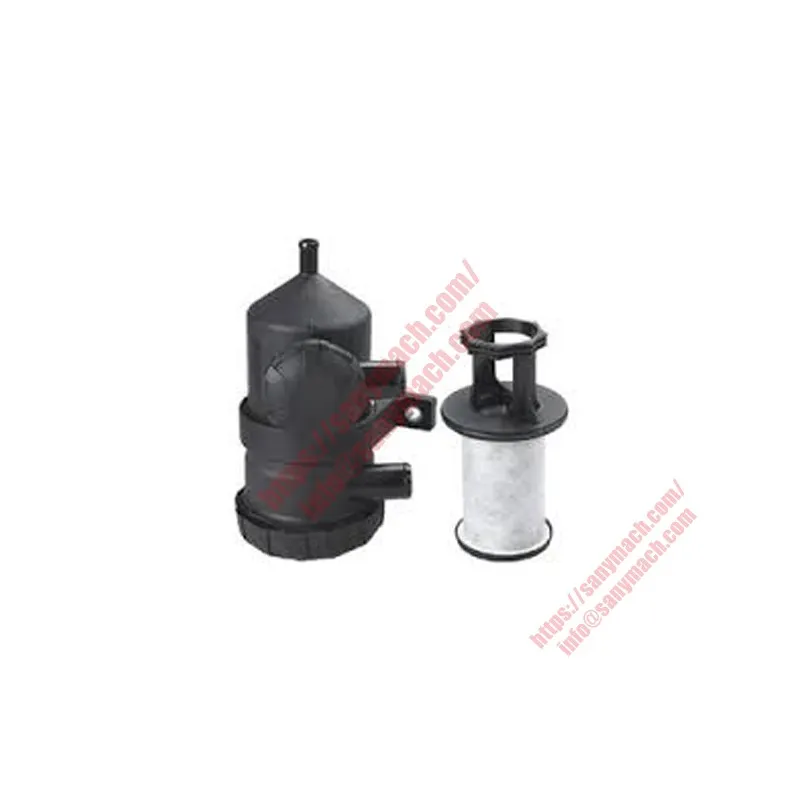
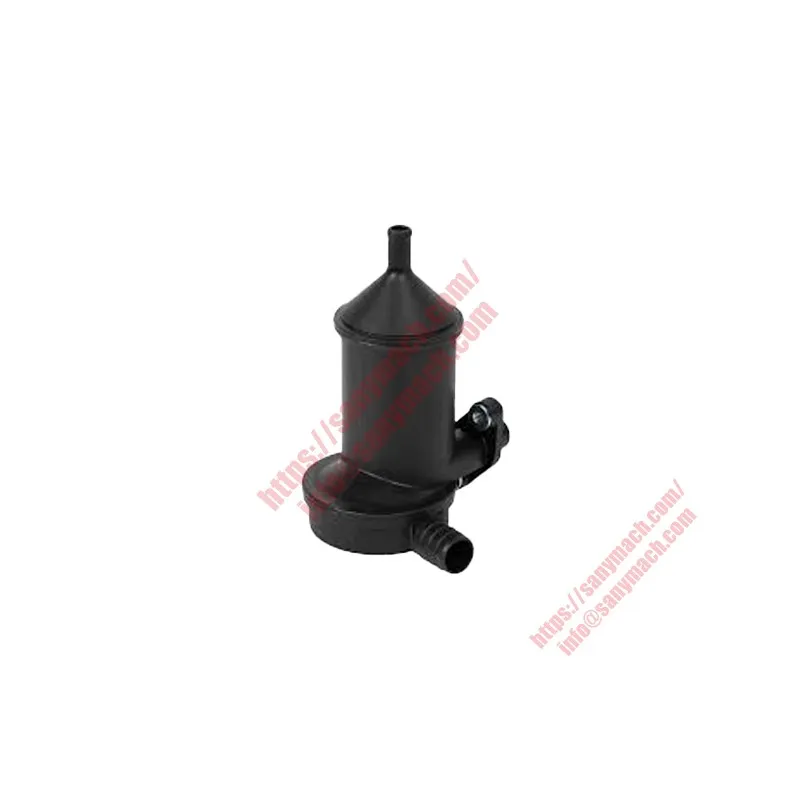
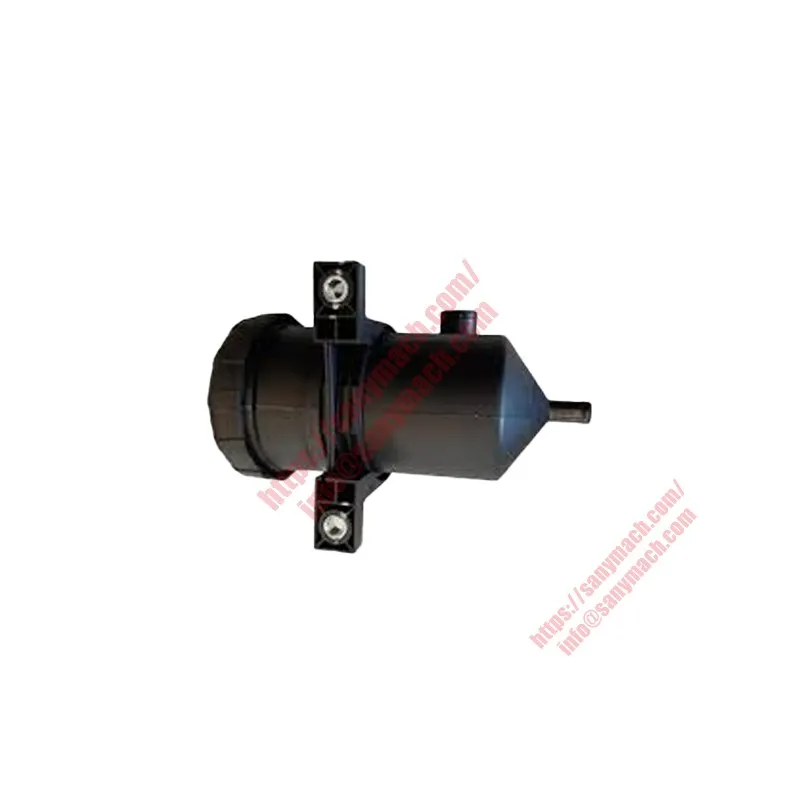
Design and Operation of Oil Gas Separator 60038917
The oil gas separator 60038917 is a closed-crankcase ventilation (CCV) component designed to remove oil aerosol from blow-by gases before they are routed to the engine intake system. During engine operation, combustion gases leak past the piston rings into the crankcase, carrying a fine mist of engine oil. If these oil-laden gases are vented directly to the atmosphere, they cause visible blue smoke and environmental pollution. If recirculated untreated into the intake system, the oil mist can foul turbocharger compressor wheels, intercoolers, intake valves, and diesel particulate filters (DPFs), leading to reduced performance and increased maintenance costs.
The 60038917 separator uses a coalescing filter element to capture oil droplets. As blow-by gases enter the separator housing through the inlet port, they are forced to pass through a fibrous filter medium. The filter fibers disrupt the gas flow, causing small oil droplets to collide, coalesce, and grow into larger droplets. Gravity then causes these larger droplets to drain to the bottom of the separator housing, where they are returned to the engine oil pan through a dedicated drain line. The cleaned gas exits through the outlet port and is recirculated into the intake system.
The housing of the 60038917 separator is manufactured from glass-reinforced nylon or similar high-strength composite material, chosen for its excellent resistance to engine oil, diesel fuel, and temperature cycling. The housing is designed to withstand crankcase pressures up to 0.5 bar and temperatures up to 120°C. Integrated mounting bosses and brackets (60326570) provide secure attachment points for the bolts and screws that hold the separator in place on the engine [6†L4-L8]. The internal coalescing element is pleated to maximize surface area and separation efficiency while minimizing flow restriction.
All 60038917 oil gas separators are 100% flow-tested at the factory to verify that the pressure drop across the separator remains within specification (typically < 50 mbar at rated engine flow). Each unit is also leak-tested and visually inspected for cracks or defects. A batch code is molded into the housing, providing traceability to the manufacturing records. Replacement of the entire separator is recommended when the element becomes clogged (indicated by increased crankcase pressure or oil mist from the breather).
Integration Within the SANY Oil-Gas Separator Group
The oil gas separator 60038917 is the central component of the SANY Oil-Gas Separator Group, a precision-engineered assembly designed to remove oil mist from crankcase gases and protect the engine’s intake and aftertreatment systems. According to the SANY catalog, the Oil-Gas Separator Group includes, along with the separator itself, the Bracket, Oil Gas Separator (60326570) for secure mounting, Hose (60326586) for gas flow, Clamp Assembly, Pipe (60321436) for secure connections, and Hose (60326573) for oil drain return [6†L2-L8]. The assembly is fastened using Bolt, Hexagon Flange (60326571) (2 units), Screw (60326455) (2 units), and Clamp (60326577) (1 unit) to ensure vibration‑resistant mounting [6†L8-L14].
The system’s integrity is maintained through a network of specialized hoses and pipes that route blow-by gases from the cylinder head cover to the separator and then to the intake system. The separator is typically mounted on the engine using the dedicated bracket, which is designed to isolate vibration and maintain proper orientation for gravity oil drainage. The oil drain line is routed to the oil pan or to a fitting on the engine block, ensuring that collected oil returns to the sump without leaking.
The SANY Oil-Gas Separator Group exemplifies SANY’s commitment to environmental responsibility and engine protection. By reducing oil carryover into the intake system, the group helps maintain turbocharger efficiency, prevents intercooler clogging, and extends the life of the diesel particulate filter (DPF) and selective catalytic reduction (SCR) catalyst. The group is also designed for serviceability, with the separator itself being replaceable without removing the bracket or disconnecting all hoses, simplifying maintenance intervals [6†L5-L10].
Machine Compatibility & Critical Applications
The oil gas separator 60038917 is used on SANY D09 and D12 series diesel engines powering a wide range of heavy-duty SANY equipment. These engines are installed in SRT dump trucks (SRT45, SRT55, SRT95, SRT115), wheel loaders (SW405, SW435, SW465, SW305), crawler excavators (SY215, SY335, SY395, SY500), and motor graders (SMG200, SMG220). It is also installed on SANY concrete pump trucks, crawler cranes, and heavy forklifts equipped with SANY’s heavy-duty diesel engines. One separator is required per engine.
The D09 engine is a straight-6 diesel with a displacement of 8.7 liters, featuring a bore of 117 mm and a stroke of 135 mm, producing between 280 and 380 horsepower with a maximum torque of 1,500 N·m. The D12 engine offers even greater displacement and power output, with a bore of 131 mm and a stroke of 150 mm, resulting in a total displacement of 12.13 liters [4†L4-L7][5†L10-L13]. Both engine families utilize SANY’s patented TOP‑Down cooling system and split-type cylinder head design to minimize noise and thermal stress. The advanced fuel systems, starter motors, and generators are sourced from Bosch, ensuring global quality standards [5†L14-L17].
For complete crankcase ventilation system reliability, the oil gas separator 60038917 must be used together with genuine SANY hoses, clamps, brackets, and bolts. When the separator becomes clogged or fails (indicated by increased oil consumption, blue exhaust smoke, or oil mist from the breather), it should be replaced with a new genuine SANY unit. Attempting to clean or reuse a clogged separator is not recommended, as the coalescing element cannot be restored to its original efficiency.
Technical Specifications – Oil Gas Separator 60038917
| Parameter | Specification / Value |
|---|---|
| OEM Part Number | 60038917 |
| Product Name | Oil Gas Separator / Crankcase Ventilation Separator |
| Material | Glass‑reinforced nylon (housing) + pleated coalescing filter element |
| Separation Efficiency | ≥ 95% (oil droplets > 0.3 µm) |
| Max Crankcase Pressure | 0.5 bar (7.25 psi) |
| Operating Temperature Range | -40°C to +120°C (-40°F to +248°F) |
| Max Gas Flow Rate | Engine‑specific (matched to D09/D12 crankcase blow‑by) |
| Pressure Drop (clean) | ≤ 50 mbar at rated flow |
| Inlet/Outlet Port Size | Engine‑specific (compatible with Hose 60326586) |
| Drain Port | Integrated self‑draining to oil pan via Hose 60326573 |
| Mounting | Bracket 60326570 + bolts 60326571 and screws 60326455 |
| Service Life | Typically 5,000–10,000 hours (depending on blow‑by rate) |
| Quantity per Engine | 1 separator |
| Associated Group | SANY Oil-Gas Separator Group |
Proper Installation and Maintenance of Oil Gas Separator 60038917
When installing the oil gas separator 60038917, ensure that the mounting bracket (60326570) is securely attached to the engine using the specified bolts (60326571 and 60326455). The separator must be oriented so that the drain port is at the lowest point to allow gravity oil return. Connect the inlet hose (from the crankcase or valve cover) to the separator inlet port, and the outlet hose (to the intake system) to the outlet port. Connect the oil drain line (Hose 60326573) to the drain port and route it to the oil pan or a dedicated fitting on the engine block, ensuring no kinks or obstructions that could prevent oil drainage [6†L8-L14].
Secure all hoses with the correct clamps (e.g., Clamp Assembly, Pipe 60321436) to prevent leaks. Use genuine SANY clamps and hoses to ensure proper fit and sealing. After installation, start the engine and inspect for any gas or oil leaks around the separator and hoses. Verify that the crankcase pressure does not exceed the specification (typically < 0.5 bar) – excessive pressure may indicate a clogged separator or a blocked drain line.
Routine maintenance of the 60038917 separator involves periodic inspection for signs of clogging, such as increased oil consumption, blue exhaust smoke, or oil mist from the breather tube. The separator is not designed to be cleaned – when clogged, it must be replaced with a new genuine SANY unit. The replacement interval varies by engine application and operating conditions; consult the SANY workshop manual for specific recommendations. Always replace the separator when performing a major engine overhaul.
When removing the separator, be prepared for oil drainage – place a suitable container under the drain line. Discard the old separator responsibly. Install a new separator with new gaskets (if any) and new clamps. Torque the mounting bolts to the SANY specification to avoid cracking the housing. After replacement, reset any crankcase pressure sensor or warning system as required.
Symptoms of a Clogged or Failed Oil Gas Separator
A clogged or failed oil gas separator 60038917 can produce several characteristic symptoms that equipment operators and technicians should recognize. Blue or white exhaust smoke, particularly under acceleration or after extended idle, is a common indicator – the smoke results from oil being drawn into the intake system and burned in the combustion chambers when the separator is no longer removing oil from the crankcase gases. Increased oil consumption without visible external leaks often points to oil carryover through the breather system.
Oil accumulation in the intake system, including the charge air cooler, turbocharger compressor outlet, and intake manifold, indicates that the separator is not capturing oil effectively. Over time, oil buildup can reduce intercooler efficiency, clog intake ports, and contribute to diesel runaway. Elevated crankcase pressure, which may cause oil to leak from gaskets and seals (such as the rear main seal or valve cover gasket), is another symptom of a blocked separator – the restriction prevents blow-by gases from escaping, pressurizing the crankcase.
If any of these symptoms are observed, inspect the oil gas separator and its hoses for blockages, kinks, or damage. A simple test is to run the engine at idle and remove the oil filler cap – excessive pressure or pulsing smoke from the filler neck may indicate a clogged separator. Replace the separator with a new genuine 60038917 unit and also inspect the hoses and clamps. Ignoring a failed separator can lead to turbocharger damage, increased emissions, and failure of emissions control components such as the DPF and SCR system.
Quality Assurance & Full Traceability
Every oil gas separator 60038917 is manufactured in an IATF 16949 certified facility under SANY’s rigorous quality management system. The production process includes raw material verification for the housing and filter media, in-process dimensional inspection, and 100% flow testing on a calibrated test bench. A sample from each production batch is subjected to thermal cycle testing, vibration testing, and pressure cycling to verify long-term durability.
The coalescing filter element is tested for separation efficiency using a laser particle counter and an oil aerosol challenge. The housing is pressure-tested and leak-checked. Each separator is visually inspected for surface defects, flash, or cracks before packaging. A batch code is molded into the housing, providing full traceability to the manufacturing records.
For bulk orders, a Certificate of Conformance (CoC) is provided, certifying that the separators meet all SANY OEM specifications for separation efficiency, pressure drop, and material composition. Independent third-party audits ensure continuous compliance with ISO 9001:2015 and IATF 16949 standards.
Field Performance of Genuine SANY Oil Gas Separator
Field data from SANY dump trucks and excavators operating in Australian iron ore mines and South African quarries shows that genuine 60038917 oil gas separators maintain effective oil removal efficiency for the recommended service interval, typically 5,000 to 10,000 operating hours depending on engine blow-by rates. Aftermarket separators often fail prematurely due to inferior filter media, poor housing sealing, or incorrect flow characteristics, leading to oil carryover into the intake system within 2,000‑5,000 hours.
The superior performance of the genuine SANY separator comes from the high-efficiency coalescing media, the optimized housing geometry that promotes droplet drainage, and the robust construction that resists cracking and leakage. Fleet owners report that standardizing on genuine SANY oil gas separators reduces turbocharger cleaning intervals, prevents intercooler oil fouling, and extends DPF cleaning intervals. The consistent separation efficiency also reduces visible exhaust smoke, helping equipment comply with emissions regulations [6†L2-L6].
To maximize service life, follow the SANY recommended replacement interval for the separator. Inspect the separator and hoses during every oil change. If the engine exhibits increased blow-by (from worn piston rings), the separator may clog more quickly; replace it more frequently in high‑blow‑by conditions. Always use genuine SANY replacement parts to ensure proper fit and performance. Following these practices ensures clean intake air, reduced oil consumption, and lower total cost of ownership.
Always order using the full part number 60038917 to ensure correct separation efficiency, flow characteristics, and housing fitment. Genuine SANY oil gas separators deliver reliable oil removal, protect turbochargers and aftertreatment systems, and reduce emissions. For complete crankcase ventilation system reliability, install 60038917 together with genuine SANY hoses, clamps, brackets, and bolts. The sophisticated engineering of the SANY Oil-Gas Separator Group ensures clean intake air, extended component life, and compliance with environmental standards. Trust only SANY original parts for your engine’s crankcase ventilation – your equipment depends on it.
Online Catalog of SANY Parts
Learn MoreIf you have any questions about our products, services, or anything related to what we offer, please don’t hesitate to leave us a message—our dedicated team is always ready to provide prompt and helpful responses to address your concerns. What’s more, when you become our valued customer, we’re delighted to offer you complimentary catalog services, giving you access to detailed, up-to-date information on our full range of products, specifications, and offerings to help you make informed decisions.